
Wednesday, October 29, 2014
Class demo

Thursday, June 19, 2014
Artist quote of the week.
"A sandwich is not much a sandwich at all if it doesn't include but all the basic food groups, and art." -Titus
Sunday, June 15, 2014
Be the genius you are now.
 |
| Titus Castanza fishing, photo by Alec Laughlin |
An artist may become disappointed to discover that they are not the kind of artist he/she had originally set out to be. If the journey is to have any amount of sincerity or originality, then the artist's voice from within reveals itself to the artist, not the other way around. For the most part, the author is born with his/her unique smell. The error in an artist's way is when he/she attempts to emulate current standards or trends to any certain degree of esthetic which aren't entirely their own. A certain esthetic or affect is often adopted by the author, masking his/her own originality and resulting in insincere results.
Art should be conceived without ulterior influence, to the utmost extent possible. An artist only needs to exude their own natural given smell and to not mask it by splashing on cologne, so to speak. Simply put, all we have to do is just be ourselves, as hard as that may sometimes be.
Cezanne realized the importance of keeping his artist core intact from a young age. He believed that the influences of school and gallery shows were to be avoided. He made his art unto himself, allowing it to evolve in its own kind of personal vacuum with as few distractions as possible, so that it could evolve unhampered over his lifetime. He was a provincial man who chose the seclusion of the countryside over the bustling opportunities of the city–he rejected criticism and fame.
 |
| Paul Cezanne, self portrait |
Another motivation realized may be that becoming more technically proficient in rendering realistically may not be nearly as important as the artist had once thought. It's only but one tool in an artist's arsenal. An artist may realize that idea is more important–to develop a philosophy on how art and life is to be expressed. Idea becomes the trumping force, away from the technical. Expert levels of technical skill may be obtained and used, but only if to strengthen the artist's argument or to help give idea greater impact. Thus, the amount of technical skill needed is subject to idea.
Picasso for instance, a brilliant draftsman who figured out his path and became famous for it, but it wasn't for his technical proficiency–quite the opposite. The impact of his ideas for the non-literal far trumped his ability to render realistically. It was as if he had unlocked his child genius and left realism behind. This is probably why he is quoted as saying,
 |
| Left is a painting done by Picasso later in his career. Right is a drawing done much earlier in his career as a student of academia. They show how Picasso departed from realism for something more expressive. A brilliant draftsman he was in both examples. |
"It takes a long time to become young." -Pablo Picasso
It was ultimately their personal expression which took them further. I wonder how much longer I must toil before my artist self is fully realized. Will I be 50, 70 or 90... or dead?
-Titus
Monday, May 26, 2014
Painting from sketches...
 |
| Painting done in studio from sketchbook drawing |
 |
| Value study done on computer |
 |
| Original drawing done on location |
Wednesday, May 14, 2014
Yurmby Color Wheel

Here's a great website created by Richard Robinson and offers an interactive color wheel where you can create your own gamut masks in virtual reality!
http://www.livepaintinglessons.com/gamutmask.php
Friday, April 18, 2014
Collecting Your Own Reference

Class demos
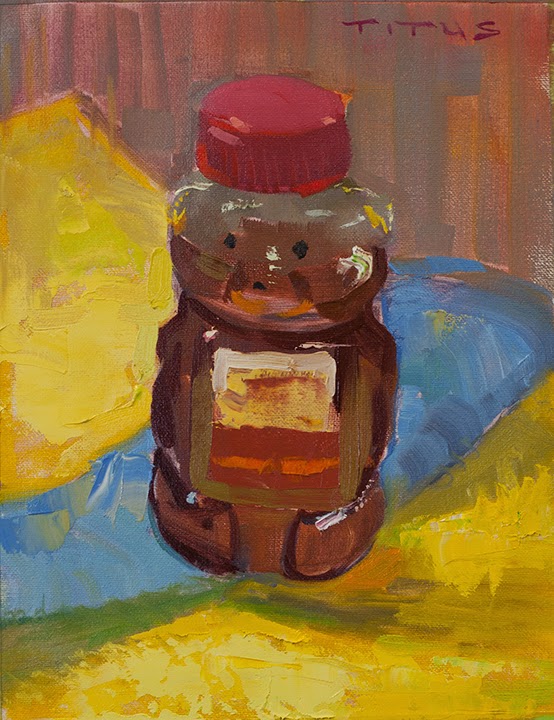 |
| Honey Bear, 10x8 inches |
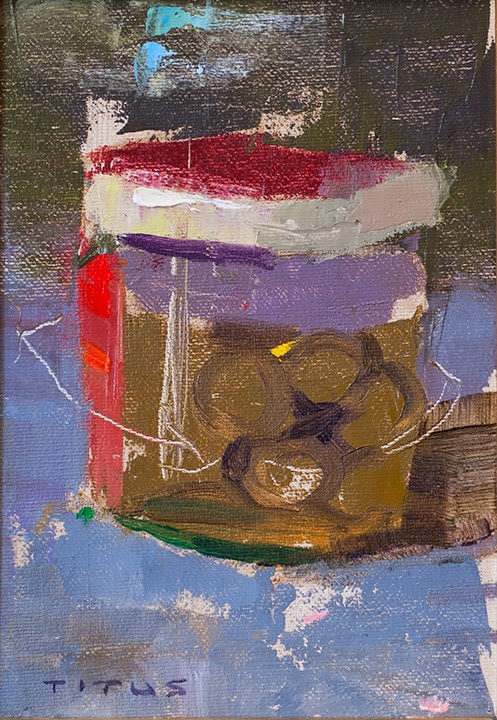 |
| Jar of Olives, 7x5 inches |
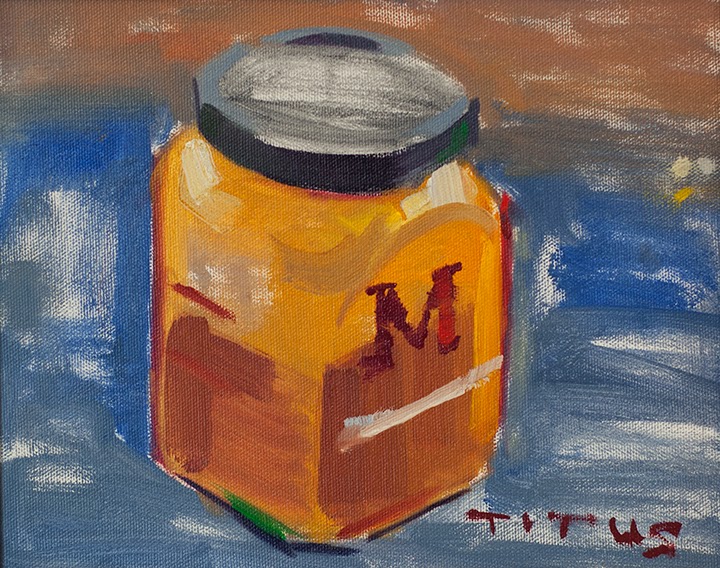 |
| Marmalade, 8x10 inches |
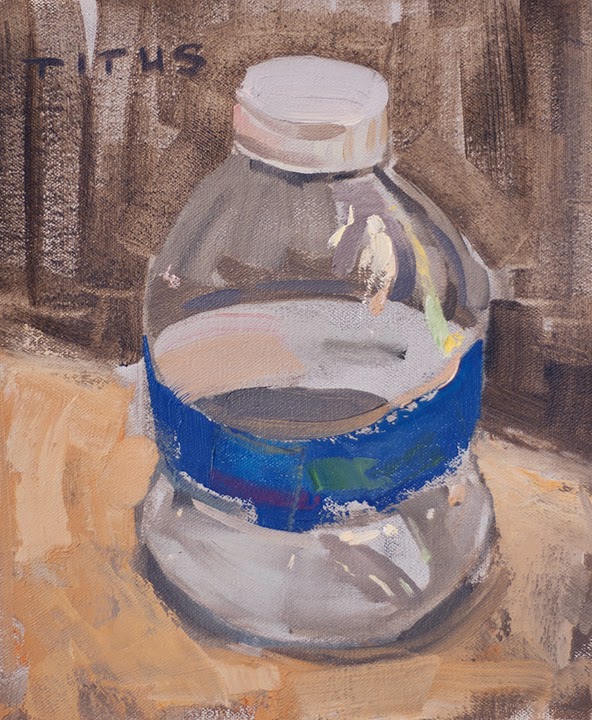 |
| Water Bottle, 10x8 inches |
Subscribe to:
Posts (Atom)